
%20(Instagram%20Post%20(45)).png)
Seasonal Eating for Perimenopause: Nutrient-Dense Plates for Energy & Resilience


For many women over 30, especially those navigating perimenopause, the conversation around food often shifts. It’s no longer just about weight or short-term fixes. It becomes about sustaining steady energy, supporting hormonal balance, and building real resilience in the body.seasonal eating perimenopause
This is the space I work in most now. After years of using ketogenic and metabolic therapies with chronic conditions, my focus has moved toward helping women optimise their metabolism, energy, and overall well-being during this important life stage. The way I do this is through the plates I build every day — always with a strong emphasis on local and seasonal food.
What “Long-Term Energy and Resilience” Really Means seasonal eating perimenopause
It means creating meals that support efficient cellular energy production, steady energy throughout the day, and proper nutrient repletion. These are the foundations that influence mood, sleep, recovery, and how well the body handles stress and hormonal fluctuations.
I also take into account that our needs shift slightly with the seasons. Changes in daylight, temperature, and the natural availability of local produce influence how we feel and what our bodies respond best to. Because of this, the plates I build in summer look quite different from those in winter or autumn.
Core Principles Behind the Plates
When I build a plate, I usually work with these priorities:
• High nutrient density, with a strong focus on minerals and micronutrients that tend to run low in women during perimenopause
• A good balance of protein, healthy fats, vegetables, and fruit to support sustained energy
• Anti-inflammatory ingredients with thoughtful omega ratios
• Supporting mitochondrial function and consistent energy supply
• Strong preference for local, seasonal ingredients
A Favourite Autumn Plate
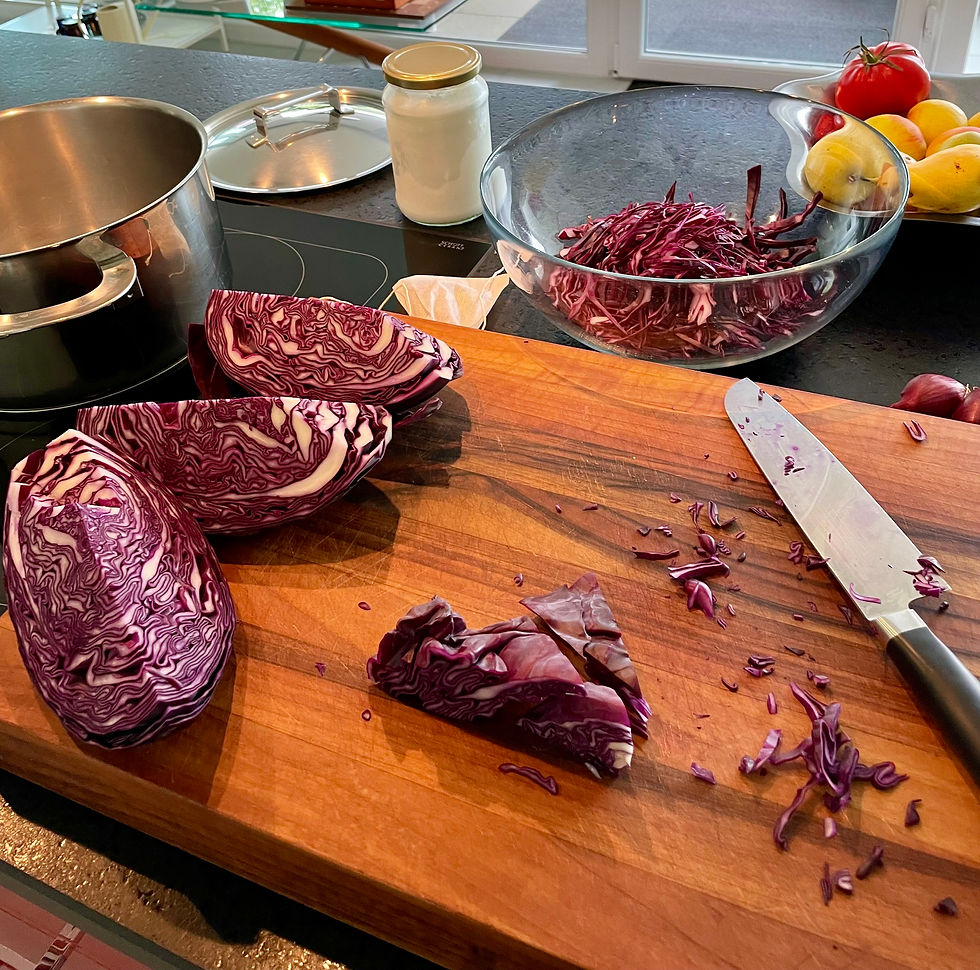
One of my regular choices during autumn is this:
Seared wild venison, celeriac purée, and slow-simmered red cabbage.
Wild venison is exceptionally rich in heme iron, zinc, B12, selenium, and niacin — all critical for energy production and hormonal health. It also has a more favourable fatty acid profile than most conventional red meats. Because venison is very lean, it benefits from added fat. I usually incorporate this into the celeriac purée, which can easily take as much fat as needed. The amount can be adjusted depending on the person’s energy requirements. I typically use animal fat, butter, or olive oil.
The red cabbage adds polyphenols and anti-inflammatory compounds. Together they create a meal that feels satiating, warming, and nourishing during the cooler months.
As the seasons change, so do the plates. In winter, I often increase the amount of fat and overall energy density. In summer, the focus shifts toward lighter, fresher ingredients and slightly lower fat. The goal remains the same — nutrient density and metabolic support — but the ingredients and preparation adapt to what is local and in season.

Why This Approach Works Differently
Many women in their 30s and 40s eat what they believe is “healthy” yet still struggle with afternoon fatigue, poor recovery, or stubborn weight. Often the missing piece is not calories, but consistent nutrient density and enough high-quality protein to support metabolism and hormones — especially when combined with seasonal, local food.
The plates I build aim to close that gap without requiring extreme rules. They’re practical, repeatable, and designed to work with a woman’s changing physiology and the natural rhythm of the seasons.


Comments