
%20(Instagram%20Post%20(45)).png)
Calorie Restriction and Longevity in Women: A Research Review

No randomized trial has shown that sustained calorie restriction extends lifespan in humans, and for women in and after menopause the evidence points to protecting muscle, bone and strength more than pursuing a lower weight. This review collects what the research says about calorie restriction, body weight and longevity, with attention to what is known and not known for midlife and older women.
The main findings:
Calorie restriction works in animals, unevenly in monkeys. The two large rhesus monkey studies disagreed, and the differences between them (overfed controls, diet quality, age at start) matter for interpretation.
The best human trial measured biomarkers, not lifespan. CALERIE 2 achieved about 12 percent restriction over two years in healthy adults averaging 38 years old, so it did not study women past menopause.
Weight and mortality follow a U or J shape that shifts with age. Mortality is lowest at roughly a BMI of 20 to 25 in pooled data and a little higher after 65. The Nurses' Health Study reported no excess mortality in lean midlife women, but other large studies, including later Nurses' Health Study analyses, do not replicate that, and fitness and activity predict survival independently of weight.
Menopause changes body composition more than weight. Fat mass rises and lean mass falls around the final period, even when the scale barely moves.
Weight loss carries different risks later in life. In older women, unintentional loss predicts earlier death, and diet-only weight loss costs muscle and bone unless it is paired with exercise.
Evidence on one meal a day and keto in menopausal women is thin. Controlled trials in this group are largely missing.

Animal data: strong in short-lived species, contested in monkeys calorie restriction and longevity in women
In yeast, worms, flies and laboratory rodents, cutting food intake by roughly 20 to 40 percent without malnutrition extends lifespan, often substantially. One caution applies: laboratory rodents with unlimited food overeat and develop obesity, high cholesterol and other metabolic disease, so part of the benefit of restriction may be reversing overfeeding.
The two large rhesus monkey studies disagreed. The University of Wisconsin study reported better survival and less cancer, cardiovascular disease and insulin resistance in restricted monkeys. The National Institute on Aging (NIA) study reported that restriction did not extend survival, although restricted animals had better cholesterol, triglycerides and fasting glucose, and fewer early cancers in the younger cohort.
A joint 2017 analysis explained much of the conflict:
The controls differed. NIA control monkeys ate less and weighed less than Wisconsin controls, who were heavier and had more diabetes.
Diet quality differed. Wisconsin monkeys ate a processed, higher-sugar diet; NIA monkeys ate more varied foods with less sugar.
Age at starting mattered. Benefit appeared when restriction began in adulthood or older age, not in the youngest animals.
Sex differed. Females appeared less vulnerable to the harms of excess fat.
The authors concluded that calorie restriction does seem to affect aging in primates, but age, diet composition and sex shape the outcome. Restricting animals that were overfed on sugary pellets helped; restricting lean animals on a better diet added little.
Human trials: biomarkers yes, lifespan no
The human evidence consists of one good randomized trial that measured aging biomarkers, one tiny sealed-habitat experiment, a population story that does not hold up well, and a wartime starvation study that shows the costs. None measured whether restricted people live longer.
Evidence | Who | What happened | What it can and cannot tell us |
CALERIE 2(randomized, 2 years) | About 220 healthy adults, average age 38, normal weight to slightly overweight | Target was 25% fewer calories; achieved about 11.9%; average weight loss 7.5 kg | Risk markers improved. Not a lifespan study, and the average age means it mostly says nothing about women past menopause. |
Biosphere 2 (2 years) | 8 crew members, ages 27 to 67 | 1,750 to 2,100 kcal a day, mostly plants; weight fell 17%; blood pressure, glucose, cholesterol and insulin fell | Eight self-selected people in a sealed habitat. Hypothesis-generating only. |
Okinawa(observational) | Population | Famed for "eat until 80 percent full" and many centenarians | The centenarian data are disputed: a 2010 Japanese review found 82% of supposed centenarians were dead. |
Minnesota Starvation Experiment(1944 to 1945) | 36 healthy young men | About 1,560 kcal a day for 24 weeks, down from about 3,200; average weight loss 25% | Not modern calorie restriction, but a clear picture of the costs: obsession with food, depression, social withdrawal, lower metabolic rate. |
The most cited result comes from the CALERIE epigenetic analysis in Nature Aging in 2023. Restriction slowed one DNA-methylation measure, DunedinPACE, by 2 to 3 percent, which the authors suggested could correspond to a 10 to 15 percent lower mortality risk. Two other epigenetic clocks, PhenoAge and GrimAge, showed no significant change, and the mortality figure is an extrapolation from a biomarker, not an observed outcome. How much of the effect reflects the weight lost, about 7.5 kg on average, is not known.
Body weight and mortality: what "normal" means, and how it changes with age
In the largest pooled analysis, mortality is lowest at a BMI of about 20 to 25 and rises on both sides, far more steeply on the high side. Studies of women specifically and of older adults add important nuances.
The standard BMI categories are 18.5 to 24.9 for normal weight, 25 to 29.9 for overweight and 30 or above for obesity. These are statistical cut-offs, not biological thresholds. BMI cannot distinguish muscle from fat or show where fat is stored, and "ideal weight" has no scientific definition; the idea descends from old life-insurance tables.

The Global BMI Mortality Collaboration pooled 3.95 million never-smokers with no chronic disease at baseline from 189 studies, and excluded smokers and the already ill. A BMI of 15 to 18.5 carried 51 percent higher risk and 30 to 35 carried 45 percent higher risk. The figures combine men and women; the sources opened for this review do not give sex-specific numbers.
Women in midlife. The Nurses' Health Study followed 115,195 US women aged 30 to 55 for 16 years (4,726 deaths). The analysis of never-smokers with stable recent weight used a BMI below 19 as the reference group, which is the leanest category and sits at or just above the underweight cutoff of 18.5. Relative to that group, mortality was 1.2 times higher at BMI 19 to 21.9 and also at 22 to 24.9, 1.3 at 25 to 26.9, 1.6 at 27 to 28.9, 2.1 at 29 to 31.9 and 2.2 at 32 or above. The authors reported the lowest mortality in women who weighed at least 15 percent less than the average US woman of their age and in women whose weight had been stable since early adulthood, and concluded that lean women did not have excess mortality. A gain of 10 kg or more since age 18 was linked with higher mortality. Only BMI is reported in the summary of this analysis; it says nothing about fitness, muscle or body fat. This result is an outlier.
The Prospective Studies Collaboration (894,576 participants, 57 studies) found mortality lowest at a BMI of about 22.5 to 25 in both sexes; a study of 1.46 million white adults found it lowest at 20 to 24.9, with the excess risk in underweight people shrinking with longer follow-up; the pooled analysis above found 20 to 25; and an Asian consortium of over 1.1 million people found the lowest risk at 22.6 to 27.5 in East Asians, with up to 2.8 times higher mortality at a BMI of 15 or below. Later analyses of the same cohorts disagree as well: a weight-history analysis of the Nurses' Health Study, Nurses' Health Study II and the Health Professionals Follow-up Study found the lowest mortality at a BMI of 22.5 to 24.9 overall and 20 to 24.9 in never-smokers, with 49 percent higher risk in underweight women. None of the sources opened for this review replicates a BMI below 19 as the lowest-risk group. The Nurses' Health Study restricted its main analysis to never-smokers with stable weight, partly to avoid distortion by illness, but its relative risks could not be checked here for statistical uncertainty, and the unusual result should be treated cautiously.
Older age. A pooled analysis of 32 studies and nearly 200,000 people aged 65 and over found higher death rates at a BMI of 23 or below and the lowest risk at 27 to 27.9. In the English Longitudinal Study of Ageing (6,864 adults, average age 66, both sexes), overweight people had lower mortality than those of normal BMI, and mortality was highest in those who lost both weight and grip strength. An older JAMA meta-analysis of 97 studies also found slightly lower mortality for overweight than for normal weight, though critics argue that including smokers and sick people distorts such results.
Fitness and activity. Weight is only part of the picture, and the studies disagree on how much fitness can offset it. In the Aerobics Center Longitudinal Study, an analysis of 7,572 women aged 20 to 89 found that unfit women had higher all-cause mortality in every BMI category (relative risk 1.70). Among 2,603 adults aged 60 and over in the same study (about 20 percent women), fit people who were obese had lower mortality than unfit people of normal weight. A 2025 meta-analysis of 20 cohort studies (398,716 observations, 33 percent women) found that fit people had no statistically different mortality across BMI categories, while unfit people had roughly twice the all-cause mortality at normal weight and when obese, and about 1.8 times when overweight. These studies measured fitness on a treadmill.
The Nurses' Health Study, which relied on self-reported activity, found a different balance. In 116,500 women followed from 1976, compared with active lean women, sedentary lean women had 55 percent higher mortality, active obese women had nearly twice the risk and sedentary obese women had 2.5 times the risk, so activity did not cancel the excess risk from obesity. Differences between treadmill-measured fitness and questionnaire-reported activity may be part of the explanation, although none of the sources opened tested that. Both sets of findings agree on one point: leanness without fitness or activity did not protect.
The pattern is consistent, and fitness adds to it: the weight associated with the lowest mortality rises with age, mild overweight carries a modest excess risk in pooled data and none in several older-age cohorts, and the danger zone is obesity above BMI 30 and, especially later in life, being underweight or losing muscle.
Menopause changes body composition more than body weight
During the menopause transition, women tend to gain fat and lose muscle even when the scale barely changes, which makes weight an unreliable guide to what is happening.
The clearest data come from the Study of Women's Health Across the Nation (SWAN), which tracked body composition with DXA scans through the transition and was reported in JCI Insight in 2019. The rate of fat gain doubled at the start of the transition and continued until about two years after the final period. Lean mass began to decline at transition onset and kept falling for two years after the final period. Overall weight, in contrast, climbed steadily during premenopause with no acceleration at the transition. The authors concluded that the accelerated fat gain and lean mass loss are related to the menopause transition.
An International Menopause Society white paper makes the same distinction: a steady gain of about 0.5 kg a year is attributed to age rather than menopause itself, while menopause shifts fat toward the abdomen, a change from a gynoid to an android pattern. The paper notes that estrogen deficiency reduced energy expenditure in animal models and that estrogen therapy may ameliorate the accumulation of abdominal fat.
For anyone reading BMI as a target, the implication is that the number can stay the same while body composition worsens. Waist circumference, strength and lean mass are the more informative measures in this stage of life.
Losing weight in midlife and later: mortality, muscle and bone
Whether weight loss helps or harms in postmenopausal women depends on whether it is intentional, whether it comes with exercise, and what is lost along with the fat.
Mortality. In the Women's Health Initiative observational study (58,961 women, mean age 63, mean BMI 27), intentional weight loss of 5 percent or more was linked with lower all-cause mortality (hazard ratio 0.88), while unintentional loss was linked with higher mortality (1.27). Diet plus exercise showed the best result (0.83), and benefits were larger when waist circumference also fell. In a separate analysis of 54,437 women with a mean age of 69.8, losing 5 percent or more of body weight over three years was associated with lower odds of surviving to 90, 95 and 100, most strongly for unintentional loss, and the authors concluded that blanket weight-loss recommendations for older women are unlikely to improve survival at advanced ages. Both are observational, and illness that causes weight loss is a recognised confounder.
Muscle. In a one-year randomized trial of 107 obese adults aged 65 and older, diet plus exercise preserved more lean mass than diet alone (a 3 percent versus 5 percent loss) and improved physical function more. In the English Longitudinal Study of Ageing, weight loss combined with falling grip strength carried the highest mortality risk. In a 12-week trial of time-restricted eating, about 65 percent of the weight lost was lean mass. That share is far above the usual 20 to 30 percent, the trial was mostly men with a mean age of 46.5, and the summary opened does not describe resistance training, so it does not represent menopausal women who train.
Bone. In a 12-month trial of 48 adults aged 50 to 60 who were mostly overweight, calorie restriction alone reduced hip bone mineral density by about 2.2 percent, while exercise-induced weight loss of a similar size did not. In the older-adult trial above, hip bone density fell 3 percent with diet alone and 1 percent with diet plus exercise. A meta-analysis of 398,610 women (average age 63) found that low BMI is a risk factor for hip and osteoporotic fractures, and that 87 percent of hip fractures occurred in women who were not obese.
Taken together, the data do not say that women past menopause should avoid losing excess fat. They say that weight lost without exercise and enough protein takes muscle and bone with it, and that unplanned weight loss in older women deserves attention.
Protecting muscle and bone: protein and resistance training
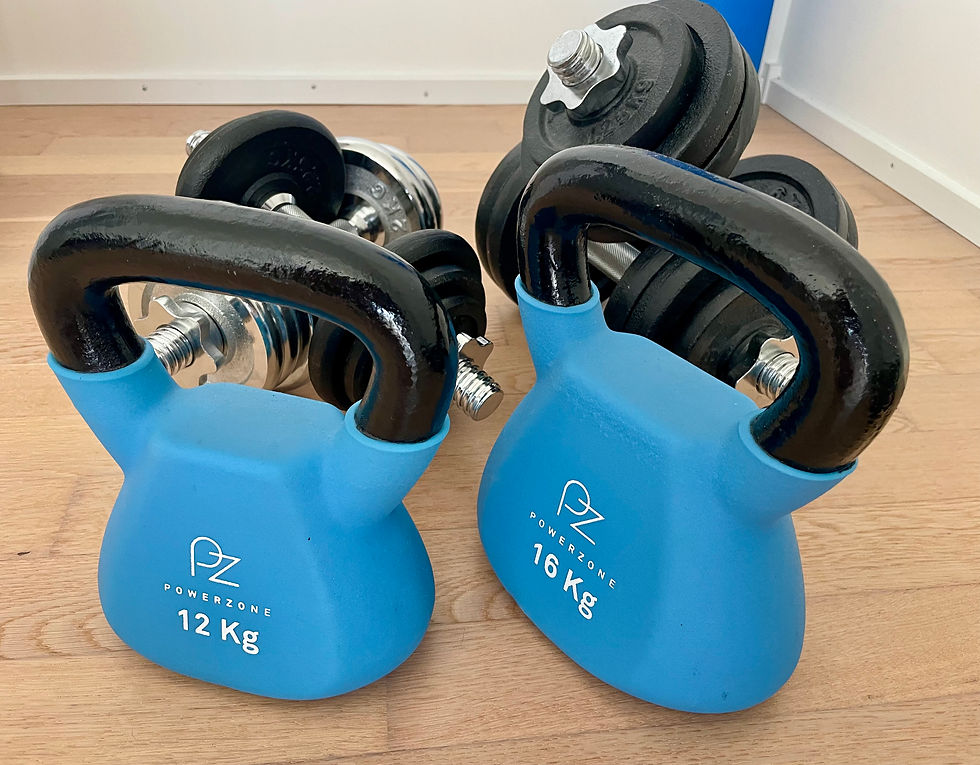
The best-supported tools for keeping muscle and bone through and after menopause are enough protein and regular resistance exercise, and the trials above show better muscle and bone outcomes when exercise is added to diet.
Protein needs are likely higher for women in midlife and beyond than the standard adult recommendation, particularly when trying to preserve muscle and strength. Aging is associated with anabolic resistance — older muscle is less responsive to the same amount of protein, and absorption and utilization become less efficient. This effect is compounded by the hormonal changes of menopause. As a result, many researchers now suggest that women over 50 benefit from protein intakes above the minimum requirement.
During weight loss or energy restriction, higher protein intake helps limit the loss of lean mass. A 2023 randomized trial in overweight postmenopausal women found that consuming approximately 1.6 g of protein per kilogram of body weight, with a focus on ~35 g of high-quality protein per meal, maximized muscle protein synthesis when combined with resistance training. Broader evidence from resistance training studies shows that lean mass gains tend to plateau around 1.6 g/kg/day in most adults, with diminishing returns above that level for many people.
Higher protein intake may also support satiety. Controlled trials and meta-analyses consistently show that higher-protein diets reduce hunger and spontaneous calorie intake compared with lower-protein diets at the same energy level, which can be useful during weight management.
For women in perimenopause and early postmenopause who are not necessarily restricting calories, a practical target of 1.4–1.8 g of protein per kilogram of body weight per day is reasonable for supporting muscle maintenance, especially when paired with resistance training. This range is higher than the general PROT-AGE recommendation for adults over 65 (1.0–1.2 g/kg) and better accounts for anabolic resistance and the desire to protect muscle during and after the menopause transition.
On exercise, resistance training two to three times per week remains the most effective way to maintain or increase muscle and strength. When weight loss occurs, combining it with resistance exercise and adequate protein protects both muscle and bone density more effectively than diet alone. Focusing on strength and body composition, rather than scale weight, is particularly relevant in this age group, as gains in muscle can improve metabolic health even if BMI stays the same or rises slightly.
Meal timing and low-carb diets in women: little direct evidence
Controlled trials of one meal a day, time-restricted eating or ketogenic diets in perimenopausal and postmenopausal women are scarce, so most of what is known comes from mixed-age groups or from related questions.
One meal a day. In a small randomized crossover trial, 15 healthy, normal-weight, middle-aged adults (10 women) ate the same calories as one meal or three meals a day for 8 weeks each. On one meal a day, hunger rose significantly, blood pressure and total, LDL and HDL cholesterol increased, and fat mass fell; cortisol decreased. The trial is short and small and not specific to menopause.
Time-restricted eating. A 12-week randomized trial in 116 adults (60 percent men, mean age 46.5) comparing an eating window of noon to 8 p.m. with three meals found no significant difference in weight loss and a large share of the loss as lean mass. A secondary analysis of an 8-week time-restricted feeding study (4 to 6 hour eating window) compared 13 premenopausal and 19 postmenopausal women with obesity. Both groups lost about 3.3 percent of body weight, with similar changes in fat mass, lean mass and fasting insulin and no difference between groups (Cienfuegos et al., 2021). The study was small and short, excluded perimenopausal women, and measured weight and risk markers rather than muscle function or long-term outcomes, so it cannot show that this eating pattern is beneficial or safe for midlife women over time.
Ketogenic diets. No controlled trial of a ketogenic diet in perimenopausal or postmenopausal women with hot flashes, weight or sleep as outcomes was found for this review. That is an absence of evidence, not evidence of no benefit, and some related findings make a benefit plausible. In the SWAN cohort of 3,075 women, hot flashes were associated with higher insulin resistance in a dose-dependent way: the HOMA index was 2.4 percent higher with 1 to 5 days of hot flashes and 5.9 percent higher with 6 or more days than with none (Thurston et al., 2012). A later SWAN analysis found that higher insulin at age 47 predicted earlier onset and longer duration of hot flashes. Both studies are observational, so they cannot show that lowering insulin reduces hot flashes, and a ketogenic diet was not tested in either.
Weight loss may matter too. In the Women's Health Initiative Dietary Modification trial of 17,473 postmenopausal women, those who lost 10 pounds or 10 percent of body weight were more likely to reduce or eliminate hot flashes after one year, on a low-fat diet. Weight loss, rather than the diet type, may therefore explain part of any benefit, and a ketogenic diet could help by making weight loss easier for some women, which has also not been tested. The only menopause-specific report found on a low-carbohydrate ketogenic diet is a single case report of a 65-year-old woman with osteoporosis and metabolic syndrome, whose bone density scores improved over 36 months on keto plus resistance training and calcium (Tidman et al., 2026). One case cannot show that the diet caused the changes. A consumer health review also notes that the effects on LDL cholesterol and bone density in menopause remain unanswered, which cuts both ways: harm is not demonstrated either.
Energy availability. A review of female reproductive function describes how the brain suppresses reproductive signaling when energy availability falls below a threshold, with leptin, ghrelin and kisspeptin involved, and notes this is about energy availability, not body fat alone. The review does not address meal timing, and its relevance to women in perimenopause was not established in the sources opened here.
The practical reading is that no meal pattern has been shown to be better for longevity in menopausal women, and that individual tolerance (hunger, sleep, energy, muscle and strength) is the more useful guide than any rule.
Hunger, whole foods and the "80 percent full" rule
The best-supported approach is changing what is eaten, not counting calories, because food quality changes how much people want. A 2019 NIH inpatient trial put 20 adults in a clinic for a month, eating an ultra-processed diet for two weeks and a minimally processed diet for two weeks in random order, with as much food as they liked. The diets were matched for calories offered, sugar, fiber, fat and carbohydrate. On the ultra-processed diet people ate about 500 more calories a day, ate faster and gained about 0.9 kg; on the unprocessed diet they lost a similar amount. The trial is small and short but randomized, and it shows appetite follows food form and not only nutrient counts.
The PREDIMED trial in Spain randomized people at high cardiovascular risk to a Whole-food based diet with olive oil or nuts, without calorie restriction, and reported about 30 percent fewer major cardiovascular events. The paper was later republished after problems with how some participants were randomized, with similar conclusions. That is a disease outcome, not lifespan, but it is the kind of hard evidence calorie restriction has never produced in humans.
Eating to hunger. Reviews of intuitive eating find associations with fewer disordered eating behaviors, better body image and maintained or improved diet quality, but mixed weight results and little data on cardiometabolic markers. It is unsuitable for people recovering from anorexia, who need structured eating.
What animals suggest. Wild animals are generally thought to eat until satiated or until food runs out, not to stop at 80 percent. Wild lions feed every 1.5 to 2.5 days, with fasts of up to eight days, and rest while digesting after large meals. Animals given unlimited food overeat, as the laboratory rodents above show. This is an analogy and not evidence for humans, but it fits the finding that satiety signals work normally with whole foods and are overridden by food engineered to be eaten quickly.
The 80 percent rule. The saying "hara hachi bun me" is often cited as proof that mild restriction works, but support is thin. It is a Confucian-inspired saying, not something Okinawa invented, and it reached Western readers largely through books and studies on Okinawan longevity. Nobody can measure 80 percent fullness, and research on it is limited: studies have looked at the overall diets of regions where the saying is common, not at the rule itself, and links to lower BMI and weight gain are correlational. Given the disputed centenarian records, the story is not evidence for longevity.
Calorie needs: calculators are a starting estimate
Calorie calculators give reasonable first estimates and are unreliable for any one person. The best-validated formula, Mifflin-St Jeor, predicted resting metabolic rate within 10 percent of the measured value in more people than any competing equation, but the reviewers noted "noteworthy errors" for individuals, and older adults and minority groups were underrepresented in the data. Calculators then multiply the estimate by an activity factor that is largely a guess.
A 2021 Science analysis by Pontzer and colleagues measured energy expenditure in more than 6,600 people from one week to 95 years old. Expenditure was stable from the 20s to about 60, with no jump in puberty or pregnancy and no gradual midlife slowdown. After 60 it fell about 0.7 percent a year, so a 90-year-old needed roughly 26 percent fewer calories than a midlife adult, and the decline persisted after adjusting for muscle mass. The summary opened for this review does not break out menopause, so it cannot say whether the transition itself shifts energy needs.
Because individuals vary, the most informative estimate is a person's own weight trend over two to three weeks of steady eating.
What the evidence supports, and where it runs out
For women in midlife and later, the research supports a focus on body composition and function over a low scale weight.
No trial shows that eating less extends human lifespan. Biomarker improvements from moderate restriction in younger adults are not evidence of a longer life.
Stable weight in a healthy range is the best-supported target. Mortality is lowest at about BMI 20 to 25 in pooled data, a little higher after 65, and unintentional weight loss in older women predicts earlier death.
Muscle, strength, fitness and waist size matter more than leanness. Menopause shifts composition toward more fat and less lean mass even without weight change.
If weight is lost, pair it with resistance exercise and adequate protein. Diet-only weight loss cost muscle and hip bone in trials of adults aged 50 and older.
Whole, minimally processed food lowers spontaneous intake in a randomized trial and was linked to fewer cardiovascular events without calorie restriction.
Meal pattern is a matter of individual tolerance. No pattern, including one meal a day, time-restricted eating or keto, has been shown to improve longevity in menopausal women.
Limits of this review. Several key papers could not be opened in full because PubMed and PubMed Central blocked access, so some figures come from study summaries, news coverage and institutional pages, linked where used. They are worth checking against the original papers before relying on them. Most of the data are observational and cannot separate weight loss from the illness that can cause it. Trials in perimenopausal and postmenopausal women are few, sex-specific results for the largest pooled BMI analysis were not available, and the evidence on keto and meal timing in this group is thin. This review is general information and not medical advice; anyone with a history of disordered eating should avoid deliberate restriction.
Sources
Calorie restriction in animals
Wisconsin monkey study and 2017 joint analysis, NIA monkey study, NIA disease findings, ad libitum feeding in laboratory rodents
Calorie restriction in humans
CALERIE summary, Nature Aging epigenetic analysis, Biosphere 2, Minnesota Starvation Experiment, Okinawa and centenarian data
Weight and mortality
Global BMI Mortality Collaboration, coverage with category risks, Nurses' Health Study, women, BMI in older adults, Flegal JAMA 2013, weight, grip strength and mortality
Menopause and body composition
Weight loss, muscle and bone
WHI intentional weight loss, WHI weight loss and survival to older ages, diet and exercise in older adults, exercise and bone density, BMI and fracture risk in women, PROT-AGE protein recommendations, Is the Optimal Level of Protein Intake for Older Adults Greater Than the Recommended Dietary Allowance? , the effect of protein supplementation on resistance training-induced gains, The role of short chain fatty acids in appetite regulation
Meal timing and diets
one meal a day trial, time-restricted eating trial, keto and menopause overview, low energy availability and female reproduction, time restricted feeding in premenopausal versus postmenopausal women, Vasomotor symptoms and insulin resistance, hope to women with hot flashes, Weight loss may help eliminate menopausal symptoms, management of metabolic syndrome with postmenopausal osteoporosis, Keto and menopause
Hunger and food quality
NIH ultra-processed food trial, PREDIMED coverage, intuitive eating evidence, feast-and-fast feeding in lions, review of hara hachi bu studies
Calorie needs
ACLS women, ACLS adults 60 and over, 2025 meta-analysis, Nurses' Health Study activity and weight, Nurses' Health Study coverage
Other BMI and mortality cohorts
Later Nurses' Health Study analyses


Comments